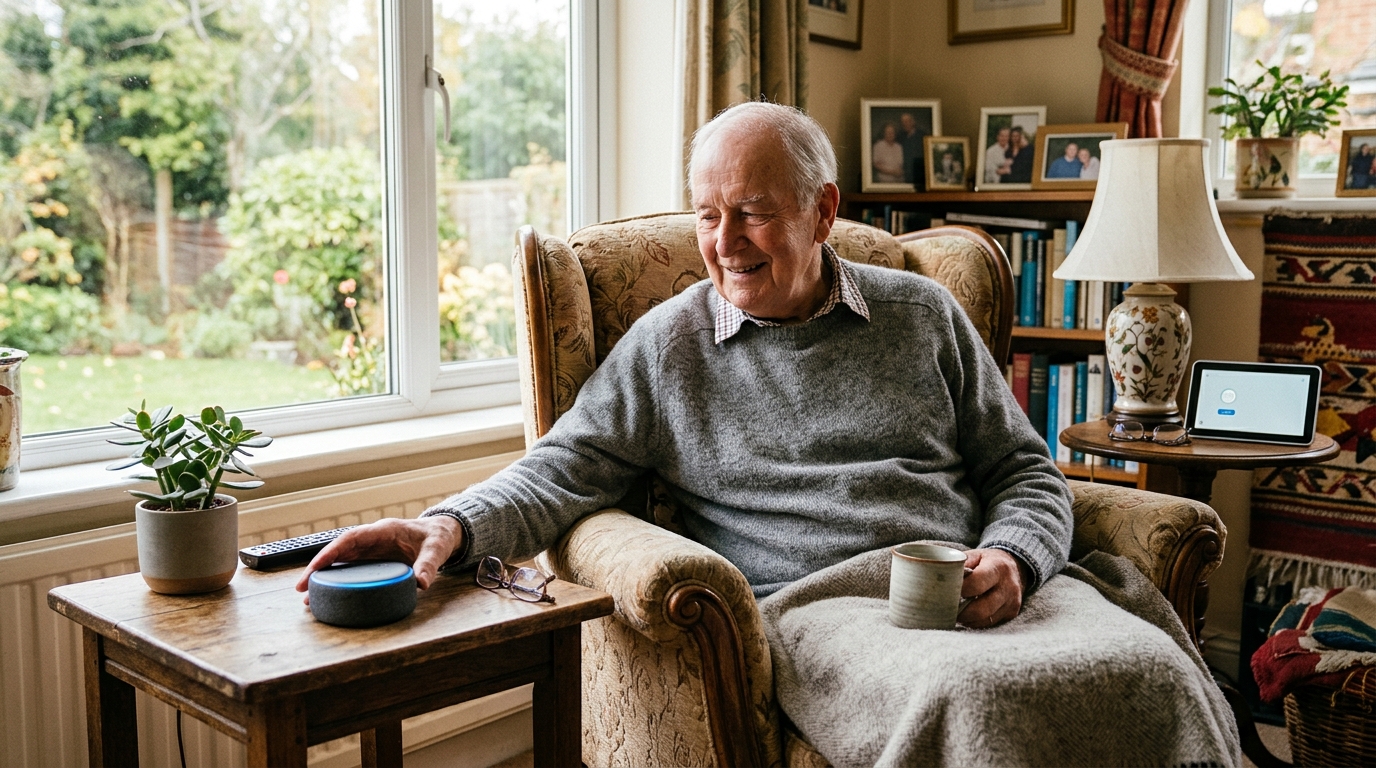
For many adult children, the desire to support an aging parent’s wish to remain in their own home—known as “aging in place”—comes with a heavy dose of anxiety. You want them to retain their hard-earned independence, to enjoy the comfort of familiar surroundings, and to live life on their own terms. But you also worry about their safety when you aren’t there to lend a hand or keep a watchful eye.
This tension between respecting their autonomy and ensuring their well-being often leads to caregiver guilt. It is the persistent feeling that you aren’t doing enough to monitor them, sharply contrasted with the guilt of feeling intrusive when you do call for the third time in a day. As the sandwich generation balances raising their own children, managing demanding careers, and caring for aging parents, the pressure can feel insurmountable.
Fortunately, today’s technology offers a brilliant middle ground. Smart home devices have evolved far beyond mere novelties; they are now vital tools that can provide subtle support and profound peace of mind without compromising an older adult’s dignity.
Creating a Subtle Safety Net
The most effective technology for aging in place doesn’t feel clinical, invasive, or patronizing. It blends seamlessly into the background of everyday life, offering assistance only when needed. When setting up a smart ecosystem for a parent, the goal should be to enhance their current routine, not force them to learn a complicated new system.
Consider starting with these foundational smart home updates that deliver immediate benefits with minimal friction:
1. Smart Lighting and Plugs
Falls are one of the greatest risks for seniors living alone, often occurring during nighttime trips to the bathroom or kitchen. Smart lighting can be programmed to automatically illuminate hallways, staircases, or bathrooms when motion is detected during nighttime hours, significantly reducing trip hazards.
Similarly, smart plugs offer both safety and peace of mind. They allow you to remotely ensure that potentially dangerous appliances, like space heaters, irons, or even the coffee maker, are turned off. Some advanced smart plugs also feature energy monitoring, which can serve as a non-invasive way to check if a parent is up and going about their normal morning routine—like seeing that the kettle was turned on at 8:00 AM.
2. Voice-Activated Assistants
Devices like the Amazon Echo, Google Nest Hub, or Apple HomePod are invaluable for older adults, particularly those with mobility or vision challenges. These devices allow seniors to easily set daily medication reminders, add items to a digital grocery list, or get quick answers about the weather without needing to navigate the small text on a smartphone screen.
More importantly, voice assistants act as a reliable communication lifeline. They can be programmed so a senior can call family members hands-free. In an emergency where they have fallen and cannot reach a telephone, a simple voice command out loud into the room can summon help immediately, acting as a modern alternative to traditional medical alert pendants.
3. Automated Check-Ins and Reminders
Constantly calling to check if your parent is awake, feeling well, or has taken their medication can strain the relationship. It can make the parent feel micromanaged and increase your own mental load. Automated phone check-in services bridge this gap beautifully.
These services provide a friendly, reliable touchpoint that ensures your loved one is safe and responsive. They offer a simple daily interaction that doesn’t feel like a supervisory check. If the check-in is missed or if the senior indicates they need assistance, caregivers are immediately notified. This frees you from the stress of constant manual monitoring while ensuring nothing falls through the cracks.
4. Smart Locks and Video Doorbells
Security at the front door is another major concern. Video doorbells allow seniors to see who is at the door from their smartphone or a smart display without having to rush to answer it, reducing the risk of a fall and protecting them from unsolicited visitors or potential scams. Smart locks complement this by allowing caregivers to grant temporary access to dog walkers, cleaners, or emergency medical personnel remotely, ensuring the home is secure yet accessible when necessary.
Balancing Safety and Privacy
When introducing new technology, it is crucial to have an open, collaborative conversation with your parent. Focus the discussion entirely on empowerment rather than supervision. Explain that these tools are designed to support their independence, make their daily life more convenient, and help them stay in their beloved home longer.
Be acutely mindful of privacy. Avoid placing cameras inside the home, especially in living spaces or bedrooms, as this almost universally makes older adults feel uncomfortable and surveilled. Often, simple motion sensors, smart plugs, and automated check-ins provide all the necessary safety signals without crossing the line into Big Brother territory.
Easing the Caregiver’s Burden
Caregiving is a marathon, not a sprint. To sustain your own energy and mental health, you need tools that share the load. By thoughtfully leveraging smart technology, you can build a reliable, invisible support system that watches out for your parent even when you are working, managing your own household, or simply taking a well-deserved break.
Technology will never replace your love, your empathy, or your physical presence. But it can successfully alleviate the heavy burden of caregiver guilt—giving both you and your parent the independence and peace of mind you both truly deserve.